astrology manifestation
New Moon Manifestation: Future-Self Audio Ritual
A quiet new moon manifestation ritual using future-self audio, intention setting, and one small action you can repeat for the next lunar cycle.
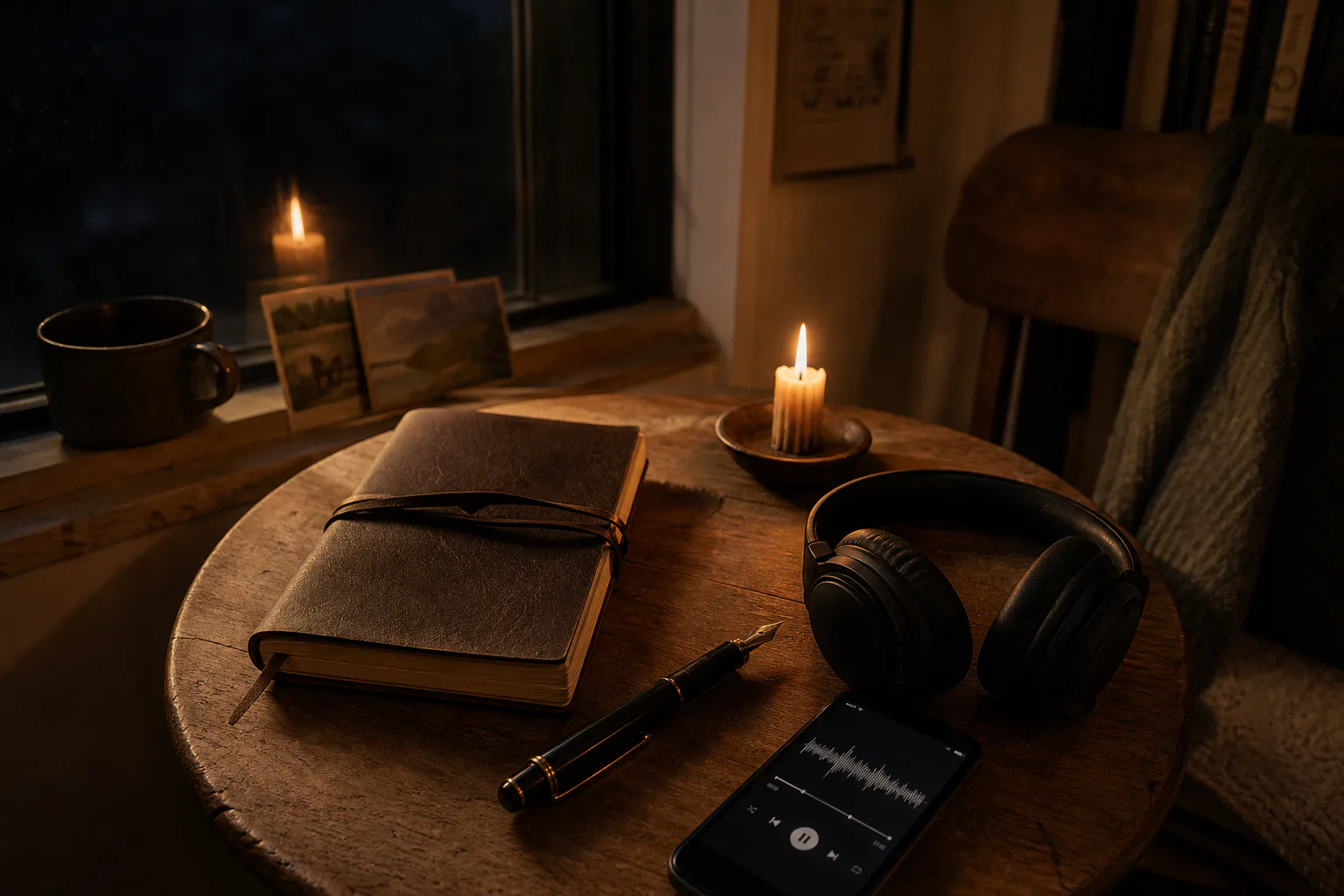
A dark window. A candle nearly out. New moon manifestation is the practice of setting one clear intention at the moon’s reset, then listening to future-self audio so the intention becomes familiar in your body and choices. You don’t need a long ritual. You need a true sentence, a quiet recording, and one next action.
What does the new moon add to manifestation?
The new moon gives your intention a monthly beginning you can remember.
Astronomically, the new moon happens when the moon sits between Earth and the sun, so the lit side faces away from you. NASA describes the lunar cycle as about 29.5 days from one new moon to the next. That number matters because it turns intention setting into a rhythm. Not a mood. Not a performance. A rhythm.
A monthly rhythm helps because the mind likes cues. Behavioral science has studied this for decades. In a 2009 study in the European Journal of Social Psychology, Phillippa Lally and colleagues found that habit formation took 66 days on average, with a wide range from 18 to 254 days. One new moon cycle won’t make a whole habit. But it can give you the first 29.5 days of return.
The quiet part is this: the moon doesn’t do the work for you. It marks the room. You enter it.
If you come from astrology, the new moon may feel like a clean page. If you come from habit design, it’s a recurring temporal landmark. Katy Milkman’s research on the “fresh start effect” found that people are more likely to pursue goals after dates that feel like beginnings: Mondays, birthdays, the first day of a month. The new moon is another beginning. Softer. Less crowded.
You can read more about the wider practice in Astrology and manifestation, but keep the ritual simple. Too many symbols can become noise. One moon. One intention. One recording. One action.
A ritual works when it makes the next right thing easier to do.
How do you prepare without making it complicated?
You prepare by removing friction before you add meaning.
Set aside 10 to 12 minutes. That’s enough. A 2022 Pew Research Center report found that 27% of U.S. adults said they meditate at least sometimes, but most people don’t sustain long practices when daily life is full. The gentler choice is to make the ritual short enough that you can actually repeat its echo tomorrow.
Use a small surface. A desk. A floor cushion. The edge of your bed. Put down three things only:
- headphones or a speaker
- a notebook and pen
- one small object that means “I’m here now”
That object can be a stone, a cup of tea, a key, a photograph, or nothing at all. You don’t need proof that you’re spiritual enough. You need a cue your nervous system can recognize. Dr. Andrew Huberman often describes the nervous system as state-dependent: what you perceive and choose changes with arousal, light, breath, and attention. Lower the noise first.
Here’s the quiet setup I’d use in Tokyo after work, when the trains are still loud outside and the apartment is small:
- Put the phone on Do Not Disturb for 12 minutes.
- Lower the light.
- Open the audio before you start writing.
- Write only one intention.
- Choose one action for the next 24 hours.
The order matters. If you start by scrolling for the “right” ritual, you’ll lose the room. If you start with silence, the room starts to remember you.
For a broader frame on intention, desire, and practice, the Manifestation pillar gives the foundation. Here, stay close to the new moon. A beginning doesn’t need decoration to be real.
What intention should you set on the new moon?
Set the intention you’re willing to meet in ordinary behavior.
The sentence should be specific enough to act on, but not so tight that it becomes a demand. “I become someone who protects my writing before I answer messages” is more useful than “I’m a successful writer.” “I practice receiving care without apologizing” is more useful than “I attract love.” The first version gives your day instructions.
Psychologist Peter Gollwitzer’s work on implementation intentions has been cited for a reason. A 2006 meta-analysis by Gollwitzer and Paschal Sheeran reviewed 94 independent tests and found that “if-then” plans had a medium-to-large effect on goal attainment. New moon manifestation becomes more grounded when your intention has a next condition: “If it’s 8:30 tomorrow, I open the document before email.”
Try this table before you write the final sentence:
| If your desire is… | Write the intention like this… | Make it physical with… |
|---|---|---|
| More creative time | I protect one honest hour before I give the day away. | Block 60 minutes tomorrow. |
| A steadier body | I become someone who returns to simple care. | Fill a water bottle tonight. |
| Clearer love | I speak plainly instead of testing people. | Send one direct message. |
| Better money habits | I look at the numbers without shame. | Open the account for 5 minutes. |
Notice the scale. Five minutes. One message. One hour. BJ Fogg’s behavior design work at Stanford argues that tiny actions matter because behavior happens when motivation, ability, and a prompt meet at the same moment. A new moon gives the prompt. Your action must be easy enough to meet.
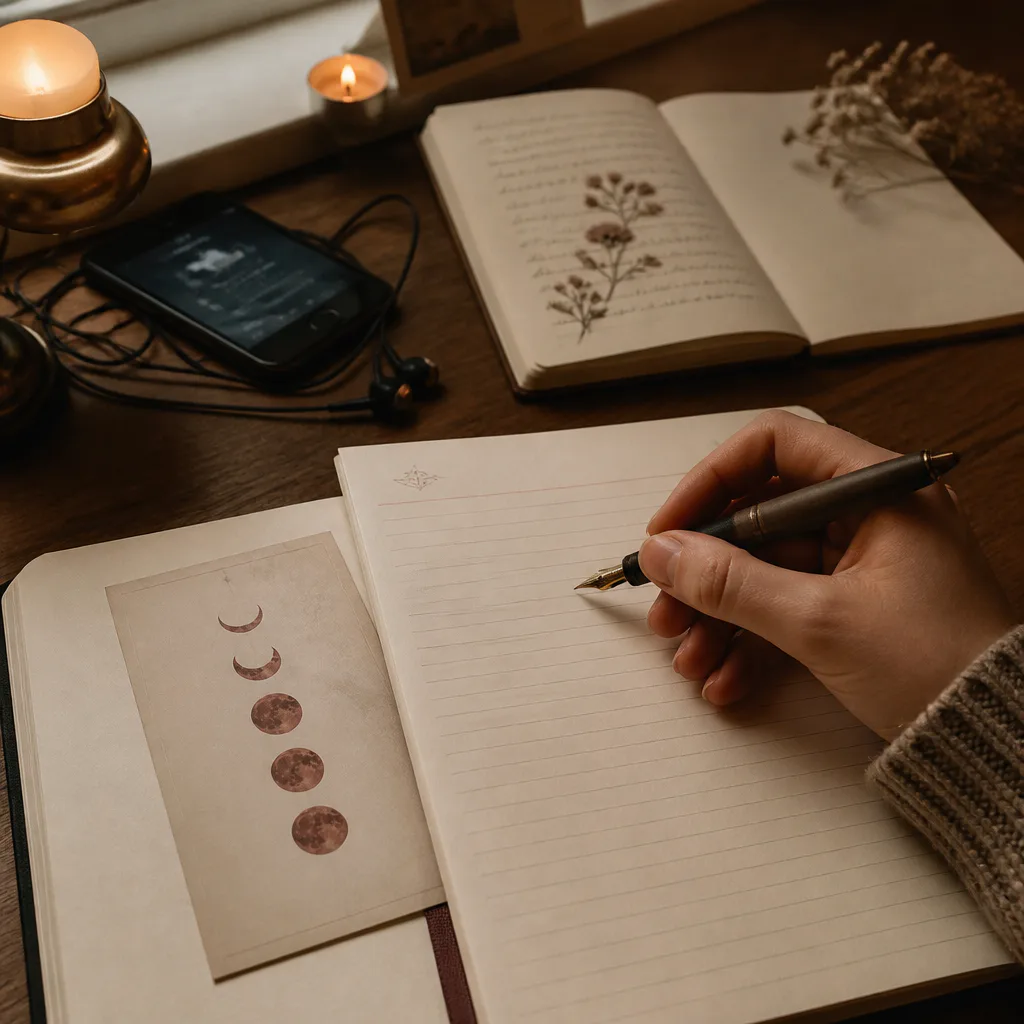
If you use affirmations, let one sentence support the intention. Don’t make the affirmation do all the work. Say it once. Write it once. Then ask: what would make this sentence visible by tomorrow?
The truest intention is the one you can recognize at 4 p.m. on a normal day.
How do you use future-self audio in the ritual?
You use future-self audio by listening as if the intended life is already speaking in a calm, ordinary voice.
This is where the AYA Method belongs. The AYA Method is a daily audio manifestation practice. Each day you listen to a short personalized recording — your Dream-Self Moment — narrated from the version of you who has already manifested the life you intend. Listening is the practice. Repetition is the work. The audio is the method.
For the new moon, press play after you write the intention, not before. Writing lets you name the door. Listening lets you hear who walks through it. Cognitive research on mental simulation suggests that imagined future scenes can influence planning, especially when paired with concrete steps. Gabriele Oettingen’s work on mental contrasting also warns against fantasy alone. The future image helps most when it meets present reality.
So listen this way:
- Sit still for the first 20 seconds.
- Let your shoulders drop before the first sentence finishes.
- Notice one line that feels true, not impressive.
- Write that line down after the audio ends.
- Turn it into one action within 24 hours.
You’re not trying to force belief. You’re practicing recognition. Joe Dispenza often writes about rehearsing a future self until the body becomes familiar with that state. You don’t have to take every claim literally to see the behavioral value: repeated cues change what feels available.
In the AYA Method, the app may also include a daily affirmation and a Manifestation Board. Treat them as complements. The audio stays central because it asks less of your hands and more of your listening. That matters at night. It matters when you’re tired. It matters when you’d otherwise skip the whole thing.
Listening is a small door. Repetition is how it stays open.
What should you do after the audio ends?
After the audio ends, make the intention visible through one dated action.
The mistake is staying in the feeling. A ritual can be beautiful and still leave no trace. So before you stand up, write one line that begins with “Tomorrow, I will.” Keep it almost plain. “Tomorrow, I will walk for 10 minutes after lunch.” “Tomorrow, I will ask for the invoice date.” “Tomorrow, I will open the draft and write 100 bad words.”
Specific numbers protect you from theatre. A 2017 review in Health Psychology Review found that action planning and coping planning were associated with improvements in health behavior, especially when plans named when, where, and how. You’re doing the same thing here, just in softer light.
Use this small checklist:
- Is the action under 20 minutes?
- Can you do it in the next 24 hours?
- Does it clearly relate to the intention?
- Would someone else know whether it happened?
- Is it kind enough that you won’t resist it?
If the answer is no, make it smaller. Smaller is not weaker. Smaller is how the self begins to trust you.
This is also where a Manifestation Board can help, if you use one. Place one image or phrase where you’ll see it tomorrow. Not twenty. One. Visual cues can support memory, but they can also become a way to keep choosing images instead of behavior. The board is a complement. The action is the receipt.
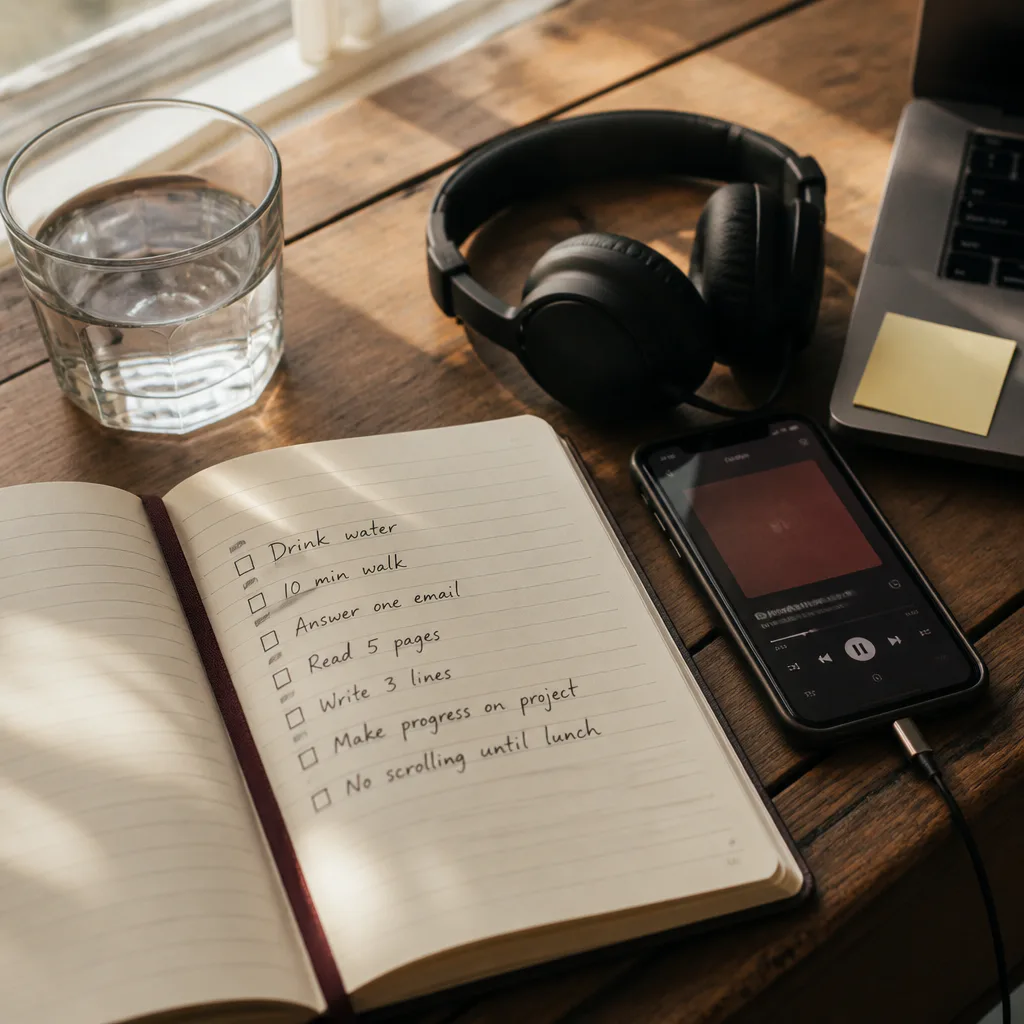
If you want the larger language of manifestation without losing the ground, return to Manifestation. The page gives the wider map. Tonight, you only need the next square inch.
How do you carry the ritual through the lunar cycle?
You carry it by listening daily and checking the intention at three simple points in the 29.5-day cycle.
The new moon is not the whole practice. It’s the first breath. For the next lunar cycle, listen to the same Dream-Self Moment each day if you can. Keep it short. The University College London habit study found large variation in how long behaviors became automatic, which is a mercy. You don’t have to be perfect by day 30. You have to return.
Use three check-ins:
| Lunar point | Approximate timing | Quiet question |
|---|---|---|
| New moon | Day 0 | What am I willing to begin? |
| First quarter | Around day 7 | What resistance has become visible? |
| Full moon | Around day 14 or 15 | What needs honesty, not more effort? |
| Last quarter | Around day 22 | What can I release from the plan? |
The moon’s phases are visible reminders, but your calendar can help too. Put one 3-minute check-in on days 7, 15, and 22. In behavior design, prompts are not a lack of discipline. They’re respect for how memory works. Most people forget because they’re human, not because the intention was false.
At each check-in, ask for evidence. Did you do the one action? Did you avoid it? Did the audio line feel closer or farther away? No drama. Just data. Joon Ito, the habit tracker in me, trusts data more than declarations. The quiet writer in me trusts repetition more than intensity.
If astrology is part of your practice, Astrology and manifestation can give the cycle more context. If it isn’t, the method still holds. A month is a clean container. A daily recording is a soft return. A small action is how the intention becomes yours.
You don’t become new by saying more. You become new by returning to what you already know is true.
Leave the candle unlit tomorrow. Listen anyway.