the morning practice
Morning pages — three handwritten pages, before anything else
Tuesday, before the kettle. Three pages, longhand, of whatever shows up. Julia Cameron called this morning pages in 1992 and the practice has stayed in print ever since because it works. It is the diary entry before the diary entry — the one nobody else reads, where the manifestation actually starts.
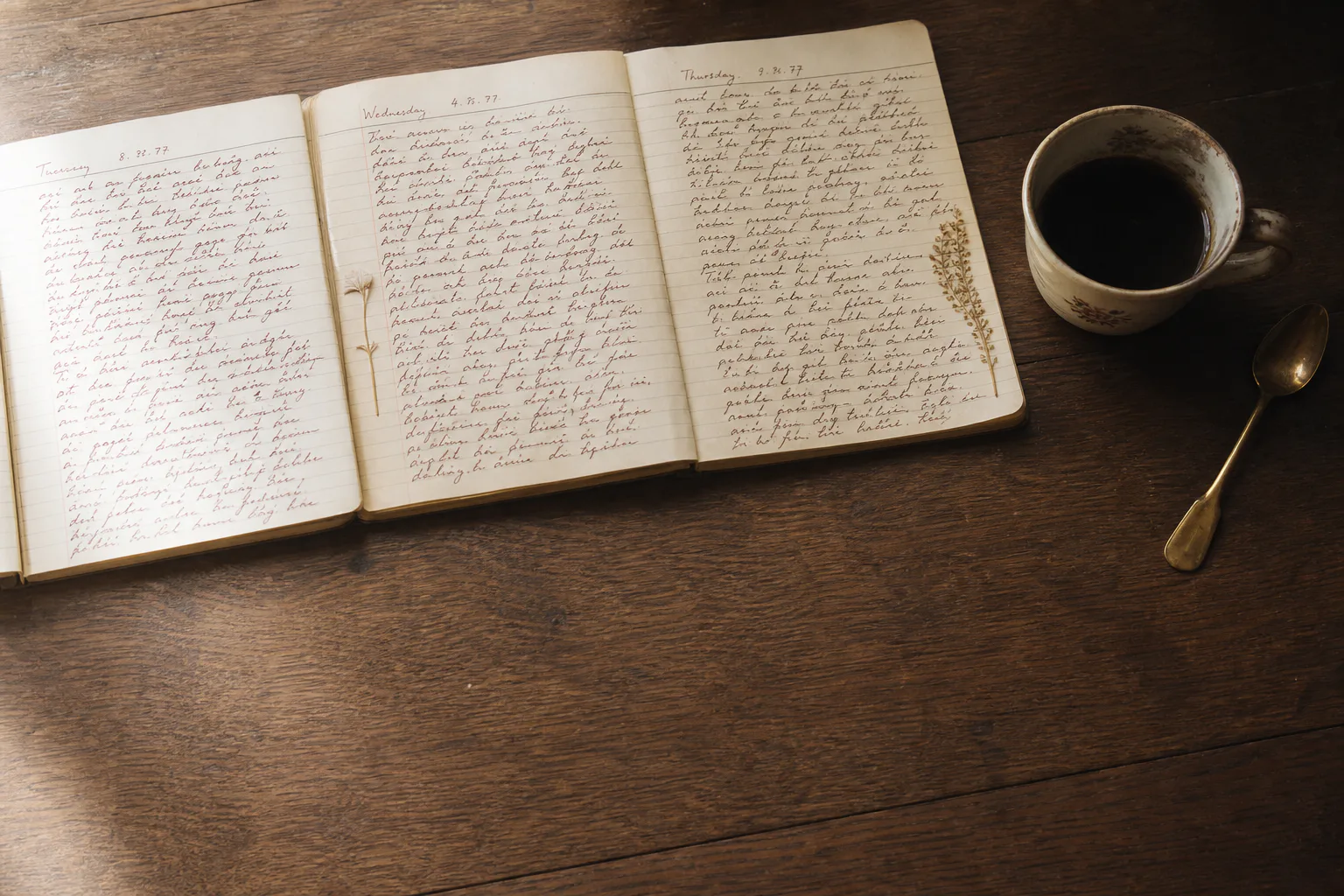
What they are, exactly
Morning pages are three pages of longhand stream-of-consciousness writing, done first thing in the morning, before any other input. No phone. No email. No reading. Just the page, the pen, and whatever is in your head when you sit down. Julia Cameron introduced the practice in The Artist’s Way (1992). The book is still in print thirty-three years later, which is a recommendation in itself.
The instruction is plain. Three pages. Longhand. Every morning. Whatever shows up.
Why they work
Most people wake up with about forty minutes of static — half-finished thoughts from the day before, anxieties looking for a foothold, plans that haven’t been made yet. Without a way to clear the static, those thoughts ride along into the morning and shape every choice you make until lunch. Morning pages are the way to clear the static.
The mechanism is unglamorous: you write until the noise gets bored and leaves. By page three, most people have run out of the obvious anxieties and started to write the things they didn’t know they were thinking. Those things are what the rest of the day needs to know.
How to do them
- Wake up. Don’t read anything first.
- Sit at the table. Notebook, pen, water if you want it.
- Start writing. Whatever shows up, in whatever order. Don’t edit. Don’t reread.
- Stop at three pages. Not two and a half. Not four. Three.
- Close the notebook and go on with your morning. The pages aren’t for rereading. The point was the writing.
What to write when you have nothing to write
Some mornings the page is hard. The trick: write that. “I have nothing to write today. The light through the window is gray. My back hurts a little. The cat is on the chair. I keep thinking about the email I have to send.” Once you start, it goes. The trick is starting.
Cameron is explicit that morning pages are not good writing. They are not journaling. They are not poetry. They are sweeping the floor. The point is the cleared floor, not the broom.
How morning pages support manifestation
Manifestation is the practice of moving toward an intended outcome through attention, repetition, and identity. Attention is the substrate. The static you wake up with consumes the attention before you can use it. Morning pages return the attention to you.
Many of us at Manifest Diary keep both practices in the same morning. Morning pages first — to clear. Then the AYA Method — listening to a Dream-Self Moment from the version of you who has already arrived. The pages get the static out. The audio puts something better in.
If three pages is too much
Cameron is dogmatic about the count. We are less so. If three pages will keep you from doing it at all, do one page for thirty days. Then add half a page each week until you reach three. Most diary keepers we know took a year to get to three pages reliably. The honesty matters more than the count.
And then what
You go on with your morning. The pages aren’t supposed to fix anything. They are supposed to clear the room you live in long enough for you to choose what to do next.