astrology manifestation
Moon Phases Manifestation: 5-Minute Audio Rituals
Moon phases manifestation becomes simpler when each lunar phase gets a five-minute audio ritual: listen, name one act, and return tomorrow quietly.
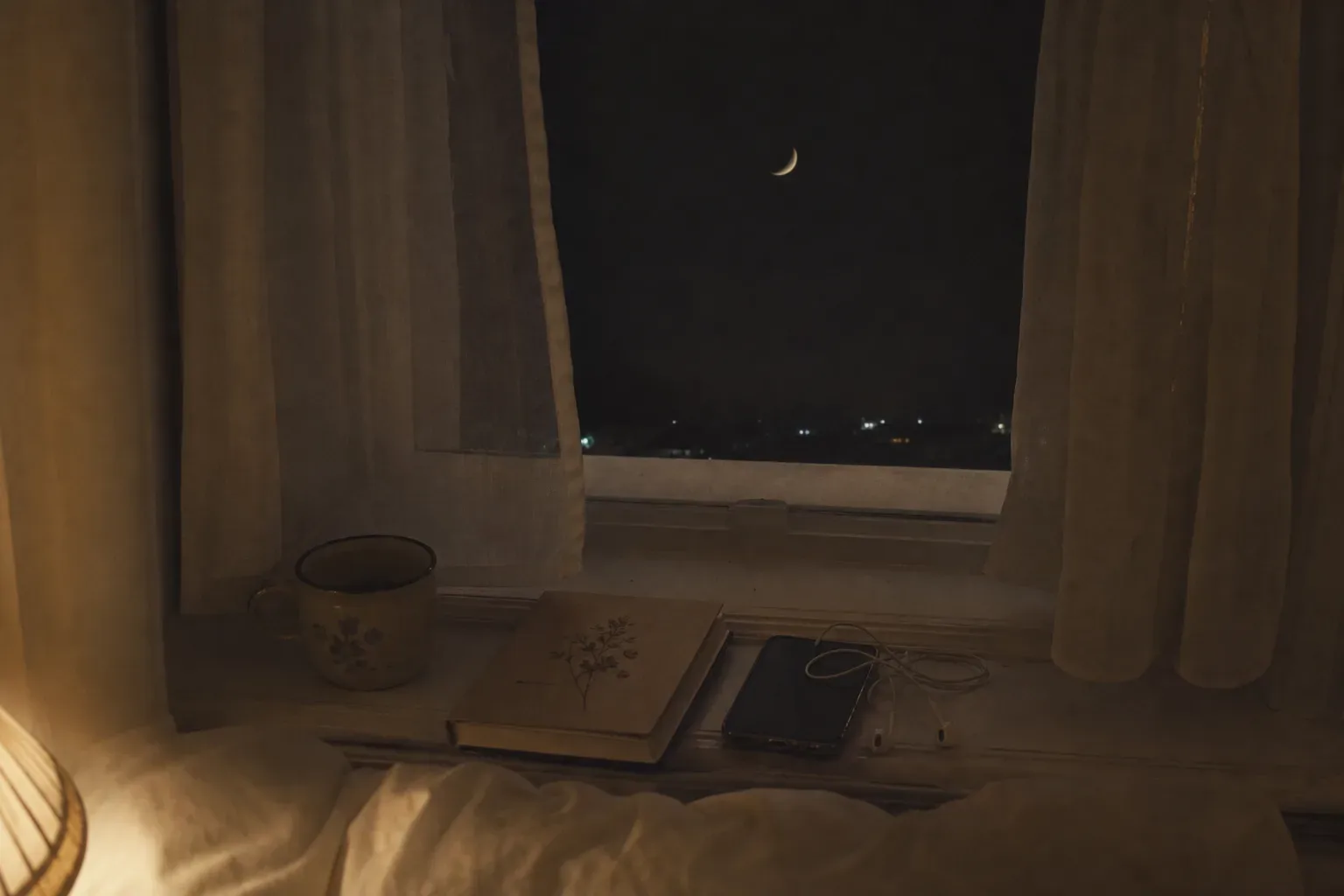
A cup sits by the window. The moon is thin, almost absent. Moon phases manifestation means using each lunar phase as a timing cue for a five-minute audio ritual: listen to your future self, name one small act, then return when the sky changes.
What does moon phases manifestation actually mean?
Moon phases manifestation means pairing the lunar cycle with a repeatable intention practice, not asking the moon to do the work for you.
NASA describes a lunar cycle, from one new moon to the next, as about 29.5 days. That gives you a natural rhythm without needing a new calendar app. The eight common phases give you roughly three to four days per phase. That is enough time to begin, adjust, see, release, and rest.
The quiet useful part is timing. A phase is not a command. It is a clean place to begin. When you look up and see a waxing moon, you remember that the work is still forming. When the moon is full, you review what is visible. When it wanes, you make room again.
This is where astrology and manifestation can stay grounded. You can use sky language without making it heavy. The moon becomes a cue, the same way a kettle boiling can cue tea or a lamp can cue reading. Behavioral scientist B. J. Fogg has written for years that tiny behaviors work best when they attach to a prompt you already notice.
In this guide, the prompt is the phase. The practice is audio. The AYA Method is a daily audio manifestation practice. Each day you listen to a short personalized recording — your Dream-Self Moment — narrated from the version of you who has already manifested the life you intend. Listening is the practice. Repetition is the work. The audio is the method.
You can add a daily affirmation or a Manifestation Board if it helps you see the intention. But they are complements. The center stays simple: listen, then make one real move.
Why make the ritual only five minutes?
Five minutes is long enough to change your state and short enough that you can keep your promise.
Long rituals can feel beautiful for a week. Then life asks for the room back. In habit research, size matters. A 2009 study by Phillippa Lally and colleagues in the European Journal of Social Psychology found that habit formation varied widely, with an average of 66 days for a behavior to become more automatic. The lesson is not that you must wait 66 days. The lesson is that repetition has to survive ordinary days.
A five-minute ritual lowers the cost of returning. You can do it before bed, after brushing your teeth, or while sitting on the edge of the bed. No altar is required. No perfect mood. No rare kind of discipline. The more dramatic the entry requirement, the less often most people enter.
Here is the basic five-minute structure:
- Minute 1: notice the current moon phase and name it out loud.
- Minutes 2 to 4: listen to your Dream-Self Moment without multitasking.
- Minute 5: write one sentence: what is the next smallest true act?
Peter Gollwitzer’s work on implementation intentions, often summarized as “if-then” planning, has shown that specific cues can help people follow through. A moon phase is not as immediate as “after I brush my teeth,” but it is memorable. It gives the practice a shape you can come back to without negotiating each time.
The five-minute limit also protects you from performance. Manifestation gets noisy when it turns into proof of worth. A short ritual says something kinder. You do not have to perform belief. You only have to return.
Which ritual belongs to each moon phase?
Each moon phase gets one job: begin, choose, face, refine, reveal, give thanks, release, and rest.
The eight-phase model is a human way of dividing a continuous cycle. The moon itself does not jump from one mood to another. Still, the model is useful. Most moon calendars mark the eight phases across about 29.5 days, which means each prompt appears often enough to remember and far enough apart to matter.
Use this table as your quiet script. If you miss a phase, do the next one. Missing is data, not failure.
| Moon phase | Five-minute audio ritual | One question to write |
|---|---|---|
| New Moon | Listen, then name one intention in plain words. | What do I want to begin without forcing? |
| Waxing Crescent | Listen, then choose one first proof. | What tiny act would make this real today? |
| First Quarter | Listen, then remove one friction point. | What is making this harder than it needs to be? |
| Waxing Gibbous | Listen, then refine the plan. | What is already working? |
| Full Moon | Listen, then review what is visible. | What can I now see clearly? |
| Waning Gibbous | Listen, then give attention back. | What deserves gratitude or sharing? |
| Last Quarter | Listen, then release one rule. | What can I stop carrying? |
| Waning Crescent | Listen, then rest the system. | What needs quiet before the next beginning? |
This is a cycle, not a ladder. The new moon is not better than the waning crescent. The full moon is not the prize. Each phase sees a different part of the same intention.
If you want a larger frame for the practice, read the manifestation pillar and keep one line from it close: manifestation works best when it changes what you notice and what you repeat. The moon can keep time without taking credit.
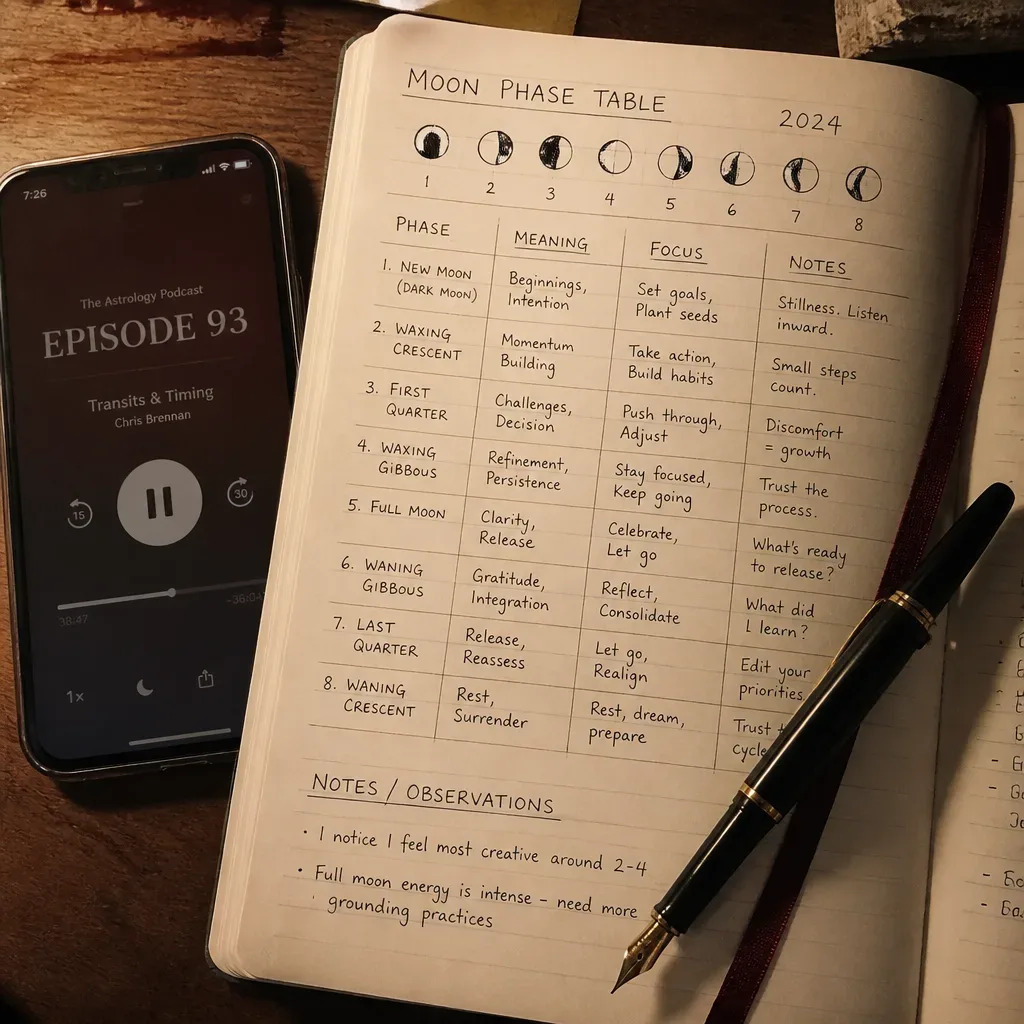
The most useful ritual is often the least impressive one. At the new moon, your sentence might be, “I am becoming someone who answers the difficult email before lunch.” At the full moon, your review might be, “I sent two emails and avoided one.” That is enough truth to work with.
How do you write the phase intention without making it too big?
Write the intention as a believable identity with one visible behavior attached.
The sentence should not be a wish thrown far away. It should sound like someone you can practice being today. Neville Goddard often wrote about assuming the feeling of the wish fulfilled. In practical terms, that means you ask: if this were already becoming true, what would I do next in the room I am in?
Try this format:
- I am becoming someone who speaks plainly about money.
- Today that looks like checking one balance without turning away.
- The proof is a note in my calendar after I do it.
That is not glamorous. Good. Specificity protects the practice. In one large review of goal-setting research, psychologists Edwin Locke and Gary Latham found that specific, challenging goals tend to produce better performance than vague goals, across many settings. You do not need to make the goal huge. You need to make the next behavior visible.
The audio helps because it gives the sentence a voice. Many people write intentions in a tone they would never use with a friend. They sound like a poster. Your Dream-Self Moment should feel more human. Someone familiar. Someone who knows what you are carrying and does not ask you to become a different species before breakfast.
If affirmations are part of your practice, keep them short and attached to the audio. The affirmations pillar explains how repetition can steady attention, but the phrase still needs somewhere to land. “I trust myself” becomes more useful when it is followed by “so I will make the call at 10.”
A true intention has a door handle. You can put your hand on it.
What should you do on the full moon?
On the full moon, you review what is visible, tell the truth gently, and choose the next adjustment.
The full moon gets the most attention because it is easy to see. That visibility can be useful. It can also make people theatrical. You do not need a dramatic release. You need an honest review. The question is not “Did the moon grant this?” The question is “What did my attention and action create?”
Sleep research gives a useful caution here. A small 2013 study in Current Biology by Christian Cajochen and colleagues reported that participants slept about 20 minutes less around the full moon, though later research has been mixed. Treat that as a reminder to keep full moon rituals calm, especially at night. If your nervous system is already bright, do not add noise.
Use this full moon review in five minutes:
- Listen to your Dream-Self Moment.
- Write one thing that happened.
- Write one thing you avoided.
- Write one thing you learned.
- Choose one next action for the waning half of the cycle.
This is where manifestation becomes adult. Not cold. Not cynical. Just honest. You do not punish yourself for the avoided thing. You make it visible so it stops running the room.
Joe Dispenza often speaks about rehearsing a future state until the body begins to recognize it. You can hold that idea lightly. Rehearsal matters most when it meets behavior. A calm body helps. A repeated cue helps. A next action helps most.
If you use a Manifestation Board, the full moon is a good time to remove what no longer feels true. Do not keep an image because past-you liked it. A board should serve the audio practice, not become a museum of old wanting.
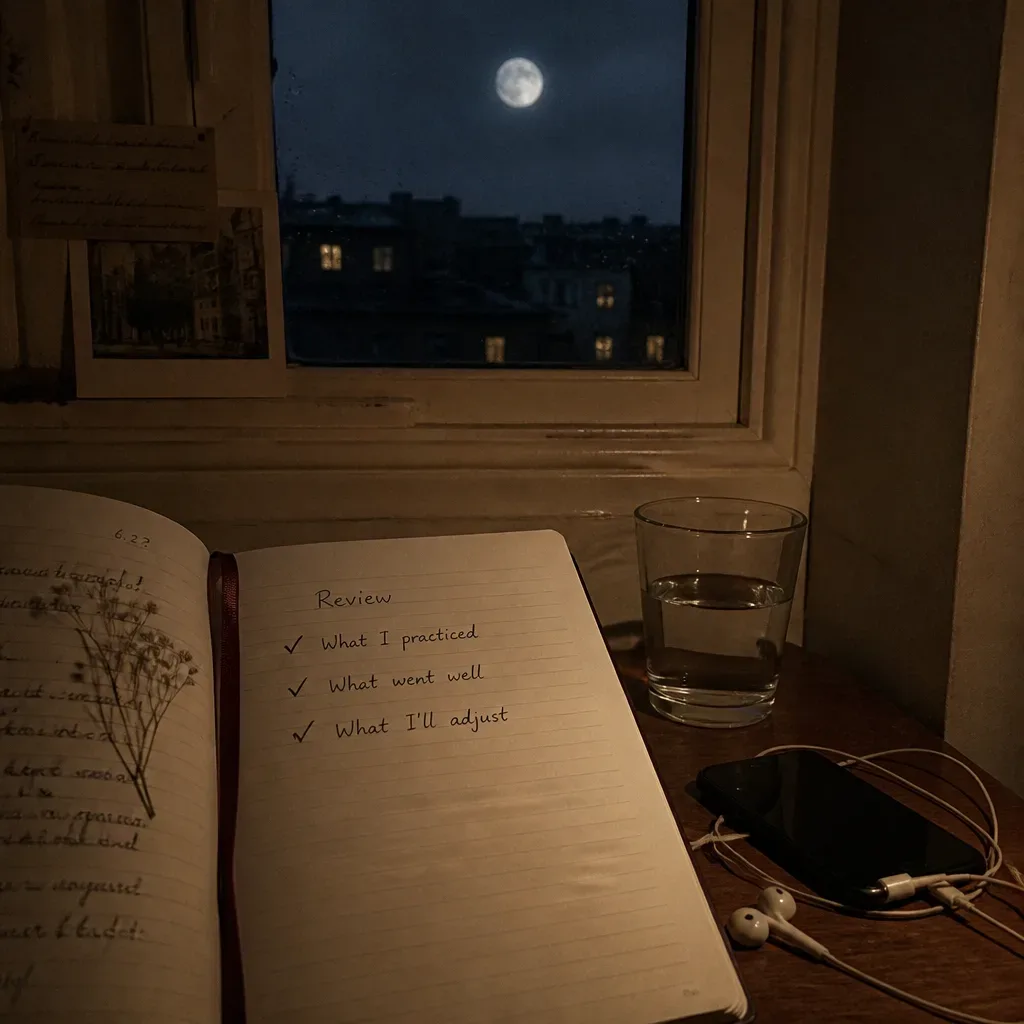
What is seen can be softened. What is named can be changed.
How can you keep the practice from becoming superstition?
Keep the moon as a cue, keep the audio as the practice, and keep behavior as the proof.
There is a clean line here. You can love lunar symbolism without handing your agency to it. The moon does not need to be blamed for your silence or credited for your courage. It can simply remind you to listen again. That is enough.
A 2019 Pew Research Center report found that many adults in the United States hold at least some New Age beliefs, including belief in astrology, while also mixing those beliefs with practical life choices. That mix is common. The question is not whether you are allowed to use symbols. The question is whether the symbol helps you act more truthfully.
Use these guardrails:
- If a phase makes you afraid, simplify the ritual.
- If a prediction makes you passive, do not use it.
- If a practice asks for perfection, make it smaller.
- If the audio helps you return to your next act, keep it.
- If the ritual becomes theatre for someone else, close the door.
This is also why the AYA practice stays audio-first. Sound enters without asking you to decorate the moment. You listen. You hear a future self speak in the past tense, as if the life you intend has already become familiar. Then you let today be ordinary and responsive.
For a wider look at how lunar timing and birth-chart language can be used without giving away your judgment, keep astrology and manifestation nearby. The useful question is always the same: does this help me notice, repeat, and choose?
Superstition asks you to wait for permission. Practice asks you to participate.
What is the simplest way to begin tonight?
Begin by finding the current moon phase, listening for five minutes, and writing one ordinary next action.
You can check the phase in any weather app or astronomy calendar. NASA and many observatories publish phase dates, and most phones show them with a widget or search. You do not need precision down to the hour. For this ritual, “new,” “waxing,” “full,” or “waning” is enough.
Then do this tonight:
- Sit somewhere you will not perform for anyone.
- Put your phone face down after starting the audio.
- Listen to your Dream-Self Moment once.
- Ask the question for the current phase.
- Write one action that can be done in under 10 minutes.
The action matters because it closes the loop. Wendy Wood’s habit research has shown that a large portion of daily behavior is shaped by repeated contexts and cues, not constant conscious effort. You are building a context: moon phase, audio, one written action. The system is small on purpose.
If tonight is a new moon, write the sentence. If it is waxing, choose the first proof. If it is full, review. If it is waning, release one rule and make tomorrow lighter. The phase you have is the phase you use.
You may want to read more about moon timing inside manifestation or return to the broader manifestation guide when you need language for the whole practice. But do not read so much that you skip the five minutes.
The ritual works because it is small enough to become yours.
Leave the cup by the window, and listen once.