mindset
Manifestation Consistency When You Keep Falling Off
Manifestation consistency gets easier when the practice is small, audible, and tied to a daily cue. Use this repair plan for missed days without shame.

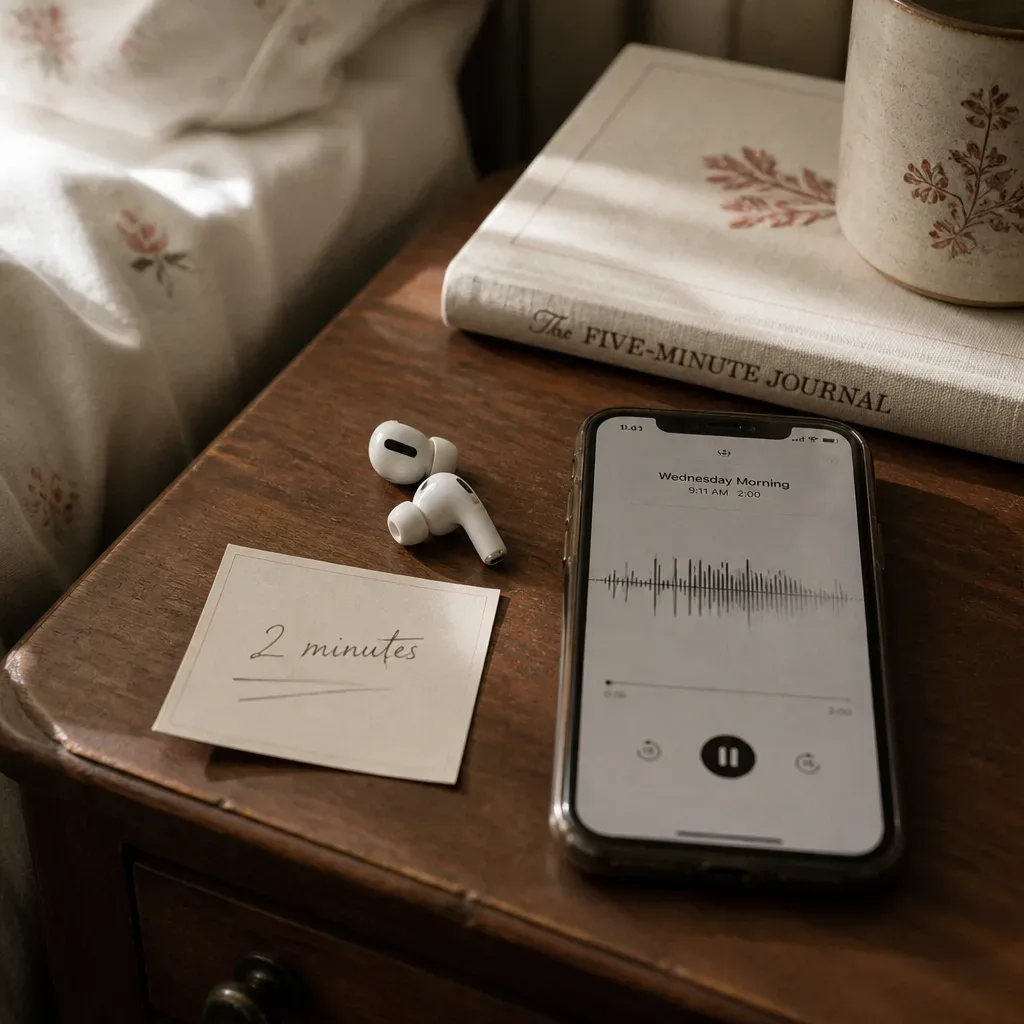
The phone is face down. Your tea is cooling. Manifestation consistency returns when the practice becomes small enough to repeat, clear enough to start, and kind enough to resume after you miss. You do not need a perfect streak. You need a daily cue, a short practice, and a repair plan.
Why does manifestation consistency break so easily?
It breaks because most people build a practice for their ideal day, then try to live it on a normal one.
A clean notebook, 30 quiet minutes, a perfect mood, a candle, a long script. None of these are wrong. They are just expensive in attention. Habit researchers often call this friction. BJ Fogg, founder of the Behavior Design Lab at Stanford, has argued for years that small behavior wins because ability matters as much as motivation. If the practice takes less than 2 minutes, it has a better chance of surviving the Tuesday version of you.
The data is humbling. In a 2009 study in the European Journal of Social Psychology, Phillippa Lally and colleagues followed 96 people building daily habits. The average time to automaticity was 66 days, but the range was 18 to 254 days. That range matters. If you fall off after 9 days, it does not mean you are bad at manifestation. It means your nervous system may not yet treat the practice as ordinary.
Consistency is not the absence of missing. It is the speed of returning.
There is another break point. Many manifestation practices are written like promises, not systems. You say you will be disciplined. Then your child wakes at 5:40, your inbox burns, or you sleep badly. A promise depends on the same mood that failed yesterday. A system depends on a cue you already trust. The question is not whether you care enough. The question is whether the next step is obvious at the exact moment you are tired.
What should you do the first day you miss?
You should repair within 24 hours, before the missed day becomes a story about who you are.
A missed day is a timestamp. Shame makes it feel like a verdict. In behavior design, this is the dangerous moment. One miss becomes a full stop because the brain starts negotiating identity: I always quit. I can never keep this up. But research on implementation intentions gives you a better tool. A 2006 meta-analysis by Peter Gollwitzer and Paschal Sheeran reviewed 94 studies and found that if-then planning had a medium-to-large effect on goal achievement, with an average effect size around d = .65.
Use that. Decide the repair before you need it.
- If I miss one day, I listen the next morning for 2 minutes.
- If I miss three days, I restart with the smallest version only.
- If I miss a week, I do not redesign my life. I choose one cue and one audio.
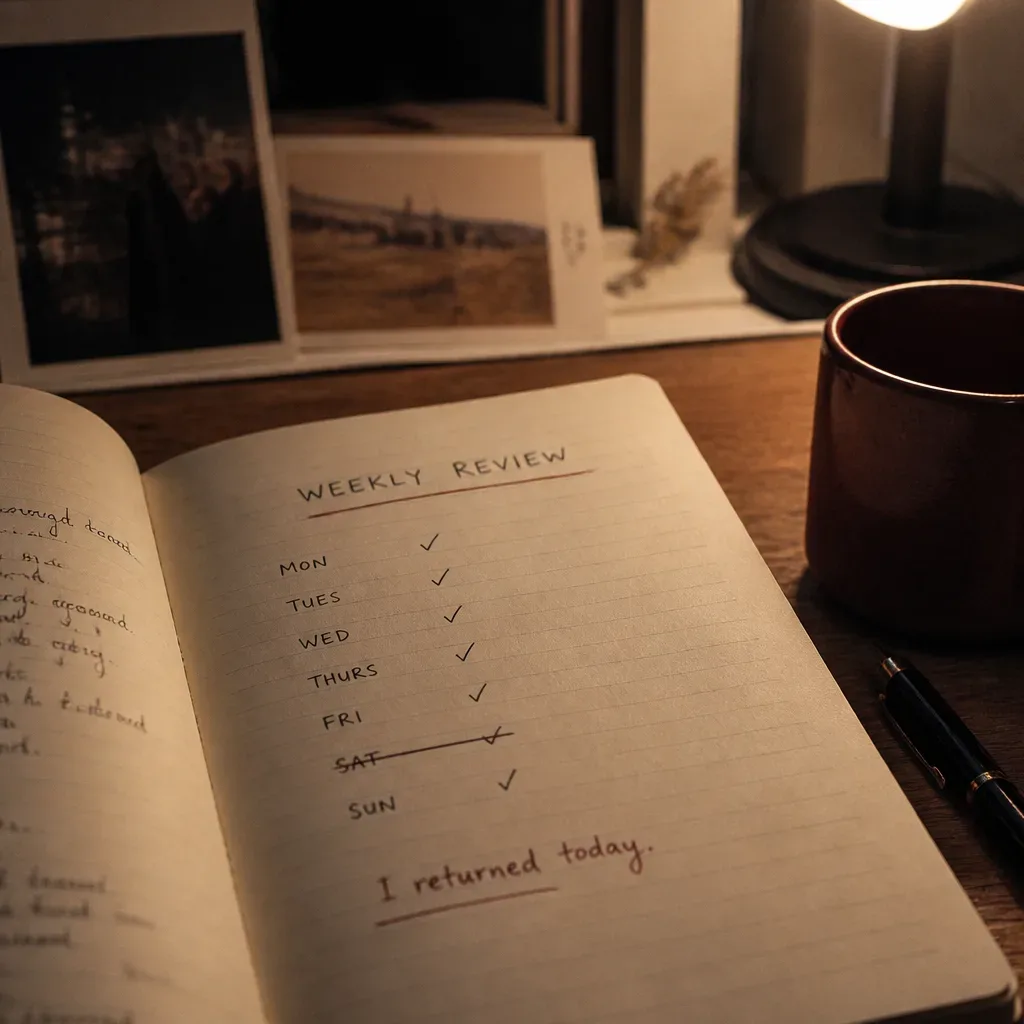
- If I feel embarrassed, I write one plain sentence: I returned today.
You don’t need a stronger intention; you need a smaller next action.
The repair should feel almost too easy. That is the point. A 60-second return interrupts the identity spiral faster than a 3-page self-audit. You can examine patterns later. First, you return. Dr. Andrew Huberman has often described behavior change in terms of repeated cues and nervous system state. Whether you follow his protocols or not, the practical lesson is simple: the body learns from repetition it can actually do.
This is the quiet rule: never punish yourself with a bigger practice because you missed a smaller one.
How do you make the practice too small to quit?
You make it too small to quit by defining a daily minimum that counts even on low-capacity days.
The minimum is not the full practice. It is the floor. When I built a habit-tracking app used by about 14,000 people, the patterns were plain. People did not fail because they lacked desire. They failed because their minimum was secretly a maximum. Ten minutes became 25. One page became five. A short practice became a ceremony. The practice that survives is usually the practice that takes less drama to begin.
For manifestation consistency, the minimum should include one clear contact with your desired self. This is where the AYA Method is useful, because it begins with audio, not performance. The AYA Method is a daily audio manifestation practice. Each day you listen to a short personalized recording — your Dream-Self Moment — narrated from the version of you who has already manifested the life you intend. Listening is the practice. Repetition is the work. The audio is the method.
The app also includes a daily affirmation and a Manifestation Board, but those are complements. If you can only do one thing, listen. That keeps the center clean.
| Practice size | What it looks like | When it counts |
|---|---|---|
| 60 seconds | Press play and listen to one section | Sick, late, overloaded |
| 2 to 5 minutes | Listen to the full Dream-Self Moment | Most ordinary days |
| 10 minutes | Listen, then write one sentence | Spacious days only |
A 2020 review in Health Psychology Review noted that habit formation is helped by stable contexts and repetition. You do not need a sacred hour. You need the same small door, opened again.
What should your weekly repair system look like?
Your weekly system should review the practice without turning the review into another place to fail.
Choose one day. Five minutes. Same time if you can. Sunday night works for some people. Friday afternoon works for others. The day matters less than the fact that it repeats. A 2016 meta-analysis by Benjamin Harkin and colleagues in Psychological Bulletin looked at 138 studies and found that progress monitoring improved goal achievement, especially when the monitoring was recorded or made visible. You do not need a complex tracker. You need a small mirror.
Use three questions:
- What day did I listen without effort?
- What day did I miss, and what was the real obstacle?
- What one thing can I make easier next week?
Do not ask whether you were good. That question is too vague. Ask what happened at the level of time, place, and cue. Maybe bedtime listening fails because you fall asleep. Maybe morning listening fails because your phone is in another room. Maybe your practice is attached to a routine that only exists 4 days a week. This is not a character flaw. It is design information.
A good weekly repair has numbers, but not drama. You might write: listened 5 of 7 days, missed both late work nights, moving cue to after brushing teeth. That is enough. The point is not to chase a perfect streak. The point is to make next week kinder and more repeatable.
Shame is a noisy coach. Data is quieter.
How can audio help when your mind argues back?
Audio helps because it gives your attention a voice to follow when written practice feels too far away.
When you are tired, the page can become a negotiation. What should I write? Do I believe this? Is it working? Audio asks less from you at the start. You press play. You listen. Your job is not to manufacture certainty on command. Your job is to return to the signal. Mental imagery research supports this direction. A classic 1994 meta-analysis by Driskell, Copper, and Moran reviewed 35 studies and found that mental practice can improve performance, especially when the rehearsal is specific and paired with real action.
That does not mean listening replaces your life. It means listening can rehearse identity in a way the body can meet. A personalized Dream-Self Moment gives you language, pacing, and a felt scene. Your future self becomes familiar through contact, not force.
This is also why affirmations can help, if they stay small. One sentence can steady the mind. But if an affirmation becomes a test of whether you believe hard enough, it turns brittle. Let the audio carry the practice. Let the affirmation be a short echo after.
If you are using the AYA Method, keep the order simple:
- Listen to the Dream-Self Moment.
- Notice one phrase that feels true enough.
- Carry that phrase into one ordinary action.
That is not theatre. That is repetition with a door handle.
How do you keep going without making it your personality?
You keep going by letting the practice be daily, private, and ordinary.
Some people turn consistency into a public identity. New tools. New posts. New declarations. Then the practice has to support an audience, not a life. You do not need that. The quieter path is usually stronger. In a 2018 Pew Research Center report, 29% of U.S. adults said they believe in astrology. Tools like astrology and manifestation can give people timing, reflection, and symbolic language. But no symbol should carry the weight of your return. Your practice still has to happen on a plain day.
Keep the rules boring enough to live with:
- Do it at the same cue when possible.
- Keep the minimum under 5 minutes.
- Track returns, not only streaks.
- Do not announce every reset.
- Let missed days teach design, not identity.
The deeper study of manifestation is not about becoming someone who never wavers. It is about staying in contact with what you know to be true, even after the mood changes. That contact can be small. It can happen with headphones in, sitting on the edge of the bed, before anyone else knows you are trying again.
One more number helps here. Lally’s 2009 habit study found that missing one opportunity did not materially affect habit formation if the person returned. That sentence is medicine for people who keep restarting. One miss is not the end. The rupture is not the danger. The long silence after the rupture is.
Return softly. That’s still a return.