evening rituals
Revenge Bedtime Procrastination: Dream-Self Audio
Revenge bedtime procrastination keeps you scrolling when you're tired. Try a 10-minute Dream-Self audio ritual before the late-night loop starts.
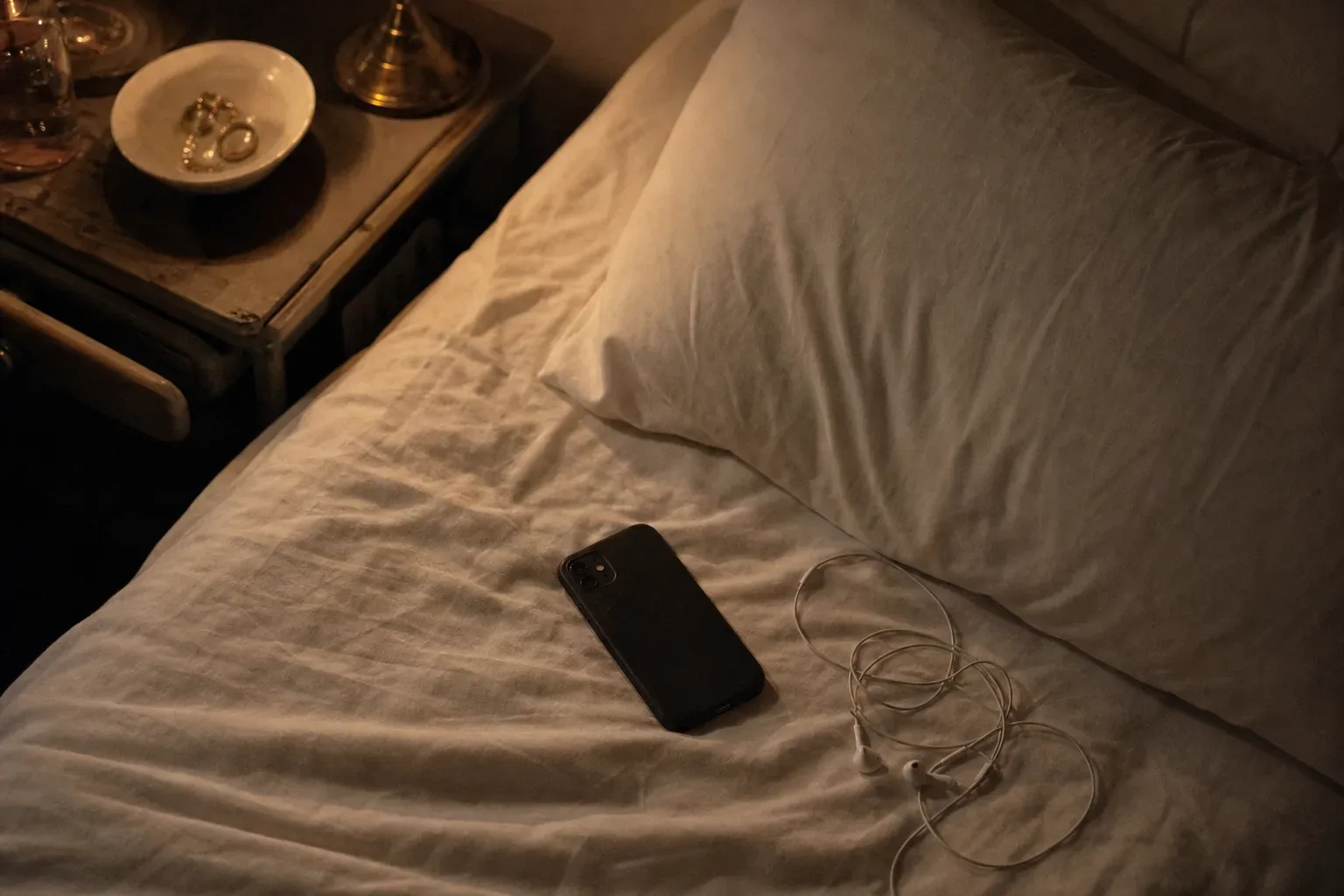
The phone is warm in your hand. You’re tired, but you don’t go to sleep. Revenge bedtime procrastination is the late-night delay of rest because the day didn’t feel like yours. Try Dream-Self audio first: a short listening ritual that gives you choice before the scroll takes it.
What is revenge bedtime procrastination, really?
Revenge bedtime procrastination is sleep delay with a reason: you want a piece of the day back.
The phrase became popular in English around 2020, but sleep researchers were studying bedtime procrastination earlier. In a 2014 paper in Frontiers in Psychology, Floor Kroese and colleagues described bedtime procrastination as going to bed later than intended without outside reasons. The revenge part adds an emotional layer. You know sleep matters. You also know the day asked too much of you.
That distinction matters. If you work late because a child is sick, that’s not procrastination. If you lie in bed at 12:47 a.m. watching short videos because it’s the only time nobody needs you, the pattern is different. The Centers for Disease Control and Prevention has reported that about 1 in 3 U.S. adults don’t get enough sleep. Your private loop sits inside a public sleep problem.
Revenge bedtime procrastination usually has three signs:
- You delay sleep even though you’re tired.
- No urgent task requires you to stay awake.
- You know tomorrow will be harder, but you keep going.
The practice here isn’t shame. Shame makes the phone brighter. The practice is to put one softer cue before the old cue. That’s why audio works well for this pattern. It doesn’t ask you to become a different person at midnight. It asks you to listen for a few minutes, while you’re still you.
The night you keep stealing from sleep is often the only part of the day that felt like yours.
If you’ve read the wider Manifestation pillar, you already know the simple claim beneath the practice: repetition teaches attention where to return. At night, attention is tired. Tired attention needs fewer choices, not better arguments.
Why does the phone win when you already want sleep?
The phone wins because it gives fast relief at the exact moment your self-control is lowest.
By bedtime, the prefrontal systems involved in planning and inhibition have spent the day making choices. Dr. Andrew Huberman often describes sleep timing through light, arousal, and behavior, but the habit point is plain enough: late-night stimulation keeps the brain engaged when it needs a softer landing. The American Academy of Sleep Medicine recommends 7 or more hours of sleep for adults. A 35-minute scroll can quietly take away almost 10 percent of that target.
There is also the reward problem. A feed gives novelty every few seconds. A bedtime rule gives you nothing but loss: close the app, stop the show, end the only quiet part. Pew Research Center has reported for years that roughly nine in ten U.S. adults own a smartphone. The device is not only near the bed. It’s part of the bed ritual.
A better evening cue has to compete on kindness, not force. It has to feel like receiving, not obeying. This is where Dream-Self audio earns its place. You aren’t staring at a blank ceiling trying to be disciplined. You hear a short recording that speaks from the life you’re practicing becoming familiar with.
Here is the difference in plain terms:
| Late-night cue | What it gives now | What it costs later |
|---|---|---|
| Scrolling | novelty, delay, control | sleep time, morning steadiness |
| One more episode | comfort, story, escape | later bedtime, heavier wake-up |
| Dream-Self audio | direction, softness, closure | 5 to 10 minutes only |
| Strict sleep rule | structure | resistance if the day felt hard |
A rule says, “Stop.” A ritual says, “Come here first.” That small difference is why the body may accept it.
How do you use Dream-Self audio before the scroll?
You use Dream-Self audio by making it the first bedtime action, before entertainment, messages, or feeds.
The order is the method. If you listen after an hour of scrolling, the old loop has already collected its reward. Put the audio before the loop, even if you don’t promise to sleep afterward. This matters because habit research often points to cue and reward as the parts you can design. Charles Duhigg popularized the cue-routine-reward loop in 2012, and later behavior design models, including BJ Fogg’s, kept the same small truth: make the next action easy enough to repeat.
Use this 10-minute version for 7 nights:
- Name your usual revenge window. Maybe it’s 10:40 to 11:20 p.m. Write it down once.
- Set one quiet cue. Headphones on pillow. Lamp dimmed. Phone face down.
- Play your Dream-Self Moment. Don’t multitask. Let the voice be the task.
- After the audio, pause for 10 breaths. Count them. Nothing more.
- Choose again. Sleep, read, or even scroll. The point is that the first choice was yours.
The AYA Method is a daily audio manifestation practice. Each day you listen to a short personalized recording — your Dream-Self Moment — narrated from the version of you who has already manifested the life you intend. Listening is the practice. Repetition is the work. The audio is the method. You can read the full shape of the AYA Method if you want the original frame.
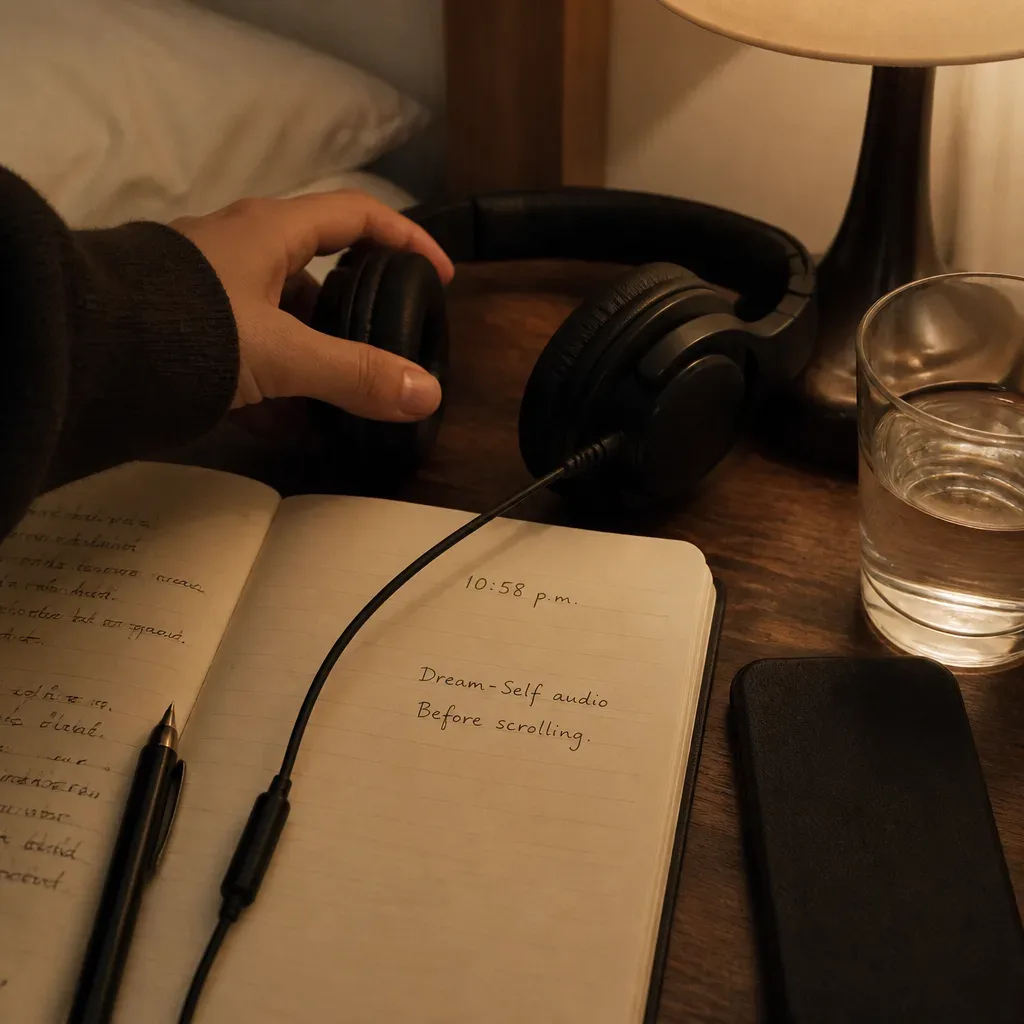
This is not a trick for becoming perfect. Perfection is too brittle for midnight. What you’re building is a first move. In small habit studies and app-retention research, the first repeated action is often more predictive than the size of the intention. Seven nights is enough to see whether the cue has a pulse.
A bedtime ritual works when it asks for the smallest honest yes.
What should the audio say to your tired mind?
The audio should sound like proof, not pressure.
At night, your mind doesn’t need a speech. It needs a believable return. A Dream-Self Moment is not a command to sleep. It’s a short narrated scene from the version of you who already protects the next morning. The language should be concrete: the lamp, the breath, the body under the sheet, the phone resting outside your hand. Neuroscience research on mental rehearsal is not one single answer, but studies of imagery and future self-continuity suggest that vividly picturing a near-future self can affect present choices.
Joe Dispenza often teaches rehearsal as a way of becoming familiar with a future state. Neville Goddard wrote about living from the wish fulfilled. You don’t have to adopt every claim around either teacher to use the practical center: the mind repeats what it can feel as real. At 11:53 p.m., real beats grand.
Keep the script close to the body:
- “I put the phone down before it takes the whole night.”
- “I know the day was full. I don’t have to pay for it with sleep.”
- “I wake with a little more room because I stopped a little sooner.”
- “This quiet counts. This is mine too.”
If you use Affirmations, keep them as a complement, not the main event. A single daily affirmation can steady the tone, but the audio is the practice here. The difference is depth of cue. An affirmation is a sentence. Dream-Self audio is a scene you can listen to when your willpower is thin.
A 2021 review in Sleep Medicine Reviews linked insufficient sleep with mood, attention, and metabolic health. That doesn’t mean one late night ruins you. It means your repeat pattern deserves care. Speak to the repeat pattern, not the single failure.
What if you still stay up after listening?
If you still stay up, the practice has not failed; you have created a pause where there used to be none.
This is the part most routines get wrong. They treat any scrolling after the ritual as proof that the ritual didn’t work. But behavior change often begins as latency: the gap between urge and action grows by 30 seconds, then 3 minutes, then a whole night. In clinical behavior work, small delays are often used because they weaken automaticity without demanding immediate abstinence.
Use the 10-minute permission rule. After the audio, you may stay awake for 10 minutes without calling it failure. Set a timer if that helps. The nervous system hears permission differently than punishment. Punishment makes the night feel stolen again, and stolen time is exactly what revenge bedtime procrastination feeds on.
Track only one number for the first week: the time you started the audio. Not sleep score. Not screen time. Not mood. One number. Wearable sleep data can be useful, but it can also make tired people more watchful. A 2017 paper in the Journal of Clinical Sleep Medicine named “orthosomnia” as anxiety around perfect sleep data. Don’t build a new loop while trying to soften the old one.
Here is the quiet measurement:
| Night | Audio start time | Did you pause after? |
|---|---|---|
| 1 | 11:18 p.m. | yes |
| 2 | 11:06 p.m. | no |
| 3 | 10:58 p.m. | yes |
| 4 | 10:51 p.m. | yes |
The win is not always sleep first. Sometimes the win is seeing the hinge.
You can also pair the audio with a visible support, like a Manifestation Board inside the app, but keep the order clear. The board is something you see. The daily affirmation is something you read or hear. The audio is the method.
How do you make the room help instead of argue?
You make the room help by removing one source of friction and one source of stimulation.
Start smaller than you think. A full evening routine with tea, stretching, journaling, skin care, reading, and no screens sounds clean on paper. At 11:30 p.m., it can feel like another job. Revenge bedtime procrastination often grows after high-demand days. More steps may create more resistance. Two environmental moves are enough: dim the room and move the phone out of your hand.
Light matters. The National Sleep Foundation and sleep medicine groups have long noted that bright light at night can delay sleep timing by affecting melatonin. You don’t need a lab setup. Use one lamp instead of overhead light. Lower the screen brightness if the phone must stay nearby. Better: put it on the floor, on a chair, or across the room before the audio begins.
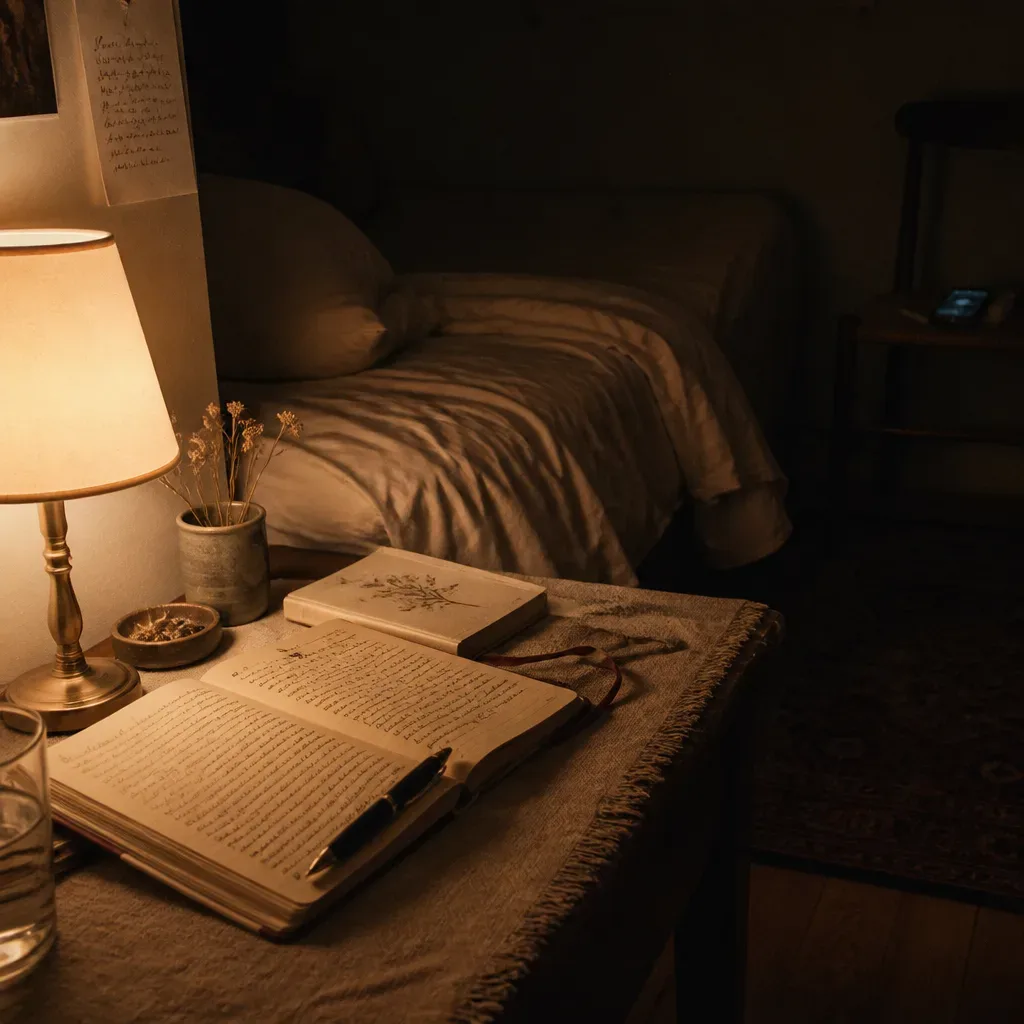
Sound matters too. If your Dream-Self audio uses headphones, choose a volume that feels close, not sharp. If you listen through the phone speaker, place it face down so the screen doesn’t keep asking for your eyes. The body reads the room faster than the mind explains it.
Try this room setup:
- One lamp only, or the lowest safe light.
- Phone face down before pressing play.
- Headphones already near the bed.
- A glass of water within reach.
- No sleep tracker review after 9 p.m.
Some people also time evening rituals with the moon, birth chart, or other symbolic systems. If that’s yours, the piece on Astrology and manifestation can help you keep symbolism grounded in practice. Use symbols as reminders, not as reasons to delay sleep.
The room doesn’t have to be perfect. It has to stop voting against you.
When should you get more support for sleep?
You should get more support when late nights are frequent, distressing, or tied to anxiety, depression, pain, or unsafe daytime sleepiness.
A Dream-Self audio ritual is a behavioral support. It is not medical care. If you regularly sleep fewer than 6 hours, nod off while driving, wake gasping, or feel unable to sleep despite exhaustion, speak with a clinician. The American Academy of Sleep Medicine treats chronic insomnia as a real condition, often helped by cognitive behavioral therapy for insomnia, known as CBT-I. Studies commonly find CBT-I effective over several weeks, with many programs lasting 6 to 8 sessions.
You may also need a different evening boundary if the issue is work. If messages from your job arrive at 10:00 p.m., your bedtime pattern is not only personal. It is structural. The ritual can give you a pause, but it should not become a way to tolerate endless demand. A true practice returns you to yourself. It doesn’t teach you to disappear.
Use this simple decision guide:
| Pattern | Try audio first? | Add support? |
|---|---|---|
| Scrolling 20 to 40 minutes after bedtime | yes | maybe later |
| Staying up 2 or more hours most nights | yes | yes |
| Panic, dread, or racing thoughts nightly | as support | yes |
| Daytime sleepiness while driving | no delay | yes, soon |
For more grounding on how intention becomes repeatable action, read the main Manifestation guide when you’re not tired. The late-night version is simple: listen first, then choose. A choice made after listening is still yours.
One soft cue. Then the night can loosen its grip.