manifestation 101
Neville Goddard SATS With Future-Self Audio
Learn neville goddard sats with future-self audio: a quiet nightly method for entering the wish fulfilled without forcing your mind.
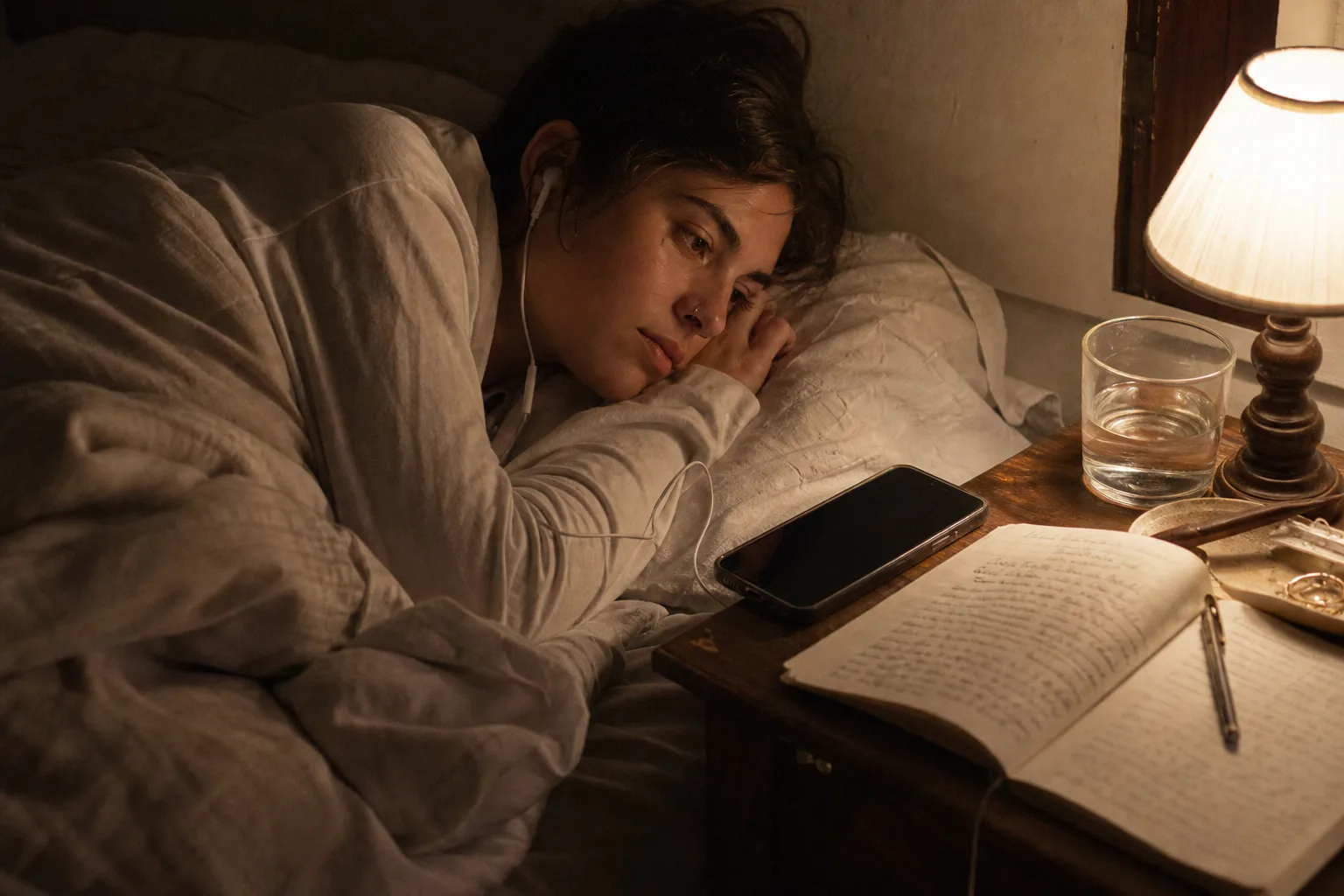
The room is dark. Your phone is face down. Neville Goddard SATS with future-self audio means entering the drowsy state before sleep while listening to a short recording from the version of you who already has what you intend. The audio holds the scene, so you can stop forcing it.
What did Neville Goddard mean by SATS?
Neville Goddard meant the quiet border of sleep, where the body is heavy and the inner image feels more real than effort.
SATS stands for “state akin to sleep.” Neville used the phrase often in lectures and books like Feeling Is the Secret, first published in 1944. He taught that the moment before sleep is useful because attention loosens. You’re not arguing with life as much. You’re less busy proving what’s possible.
In sleep science, the nearest ordinary reference is N1 sleep, the first light stage. The American Academy of Sleep Medicine describes N1 as a brief transition, often only 1 to 7 minutes in a typical sleep cycle. It’s not deep sleep. It’s the doorway. That’s why SATS is not about staying alert for a long ritual. It’s about catching the soft edge.
Neville’s method was simple. Choose a short scene that would imply your desire is already done. Repeat it inwardly until it takes on the tone of fact. Then fall asleep in that feeling. A 2012 review in Nature Reviews Neuroscience notes that mental imagery can activate some of the same neural systems used in perception and action. That doesn’t make fantasy equal to fact. It means the mind rehearses through images more concretely than most people realize.
A quiet sentence helps here:
SATS is not asking you to persuade the night. It’s asking you to enter it as the one who already knows.
If you’re new to manifestation, keep this grounded. SATS is a practice of attention, feeling, and repetition. It’s not a test of your worth. It’s not a demand that you feel perfect. One true scene is enough.
Why use future-self audio instead of silent visualization?
Future-self audio helps because it carries the scene for you when your tired mind would rather wander.
Silent visualization can be beautiful. It can also become another place to strain. You lie down and try to see the apartment, the message, the bank balance, the healed conversation. Then you wonder if the picture is clear enough. Within 30 seconds, you’re planning tomorrow’s groceries. This is normal. A 2010 Harvard study by Killingsworth and Gilbert found that people’s minds wandered 46.9% of the time during waking activity. At night, with less structure, wandering can feel even louder.
Audio gives the mind a rail. Not a cage. A rail. The voice says what to notice. The body follows. A 2021 review in Frontiers in Psychology described guided imagery as a common intervention for stress and pain, with many studies using short scripts and repeated listening. The point is not that all audio is equal. The point is that guided inner attention is a known format.
This is where the AYA Method becomes a natural companion to SATS. The AYA Method is a daily audio manifestation practice. Each day you listen to a short personalized recording — your Dream-Self Moment — narrated from the version of you who has already manifested the life you intend. Listening is the practice. Repetition is the work. The audio is the method.
Notice the order. The audio comes first. The app also includes a daily affirmation and a Manifestation Board, but those are complements. The nightly listening is the part that meets SATS most directly.
Use future-self audio when:
- your mind gets busy in silence
- you fall into effort while visualizing
- you want the same scene repeated for several nights
- your desire needs a calmer emotional tone
- you need words that feel like home, not performance
A recording can hold the wish fulfilled when your willpower is tired. That’s the mercy of it.
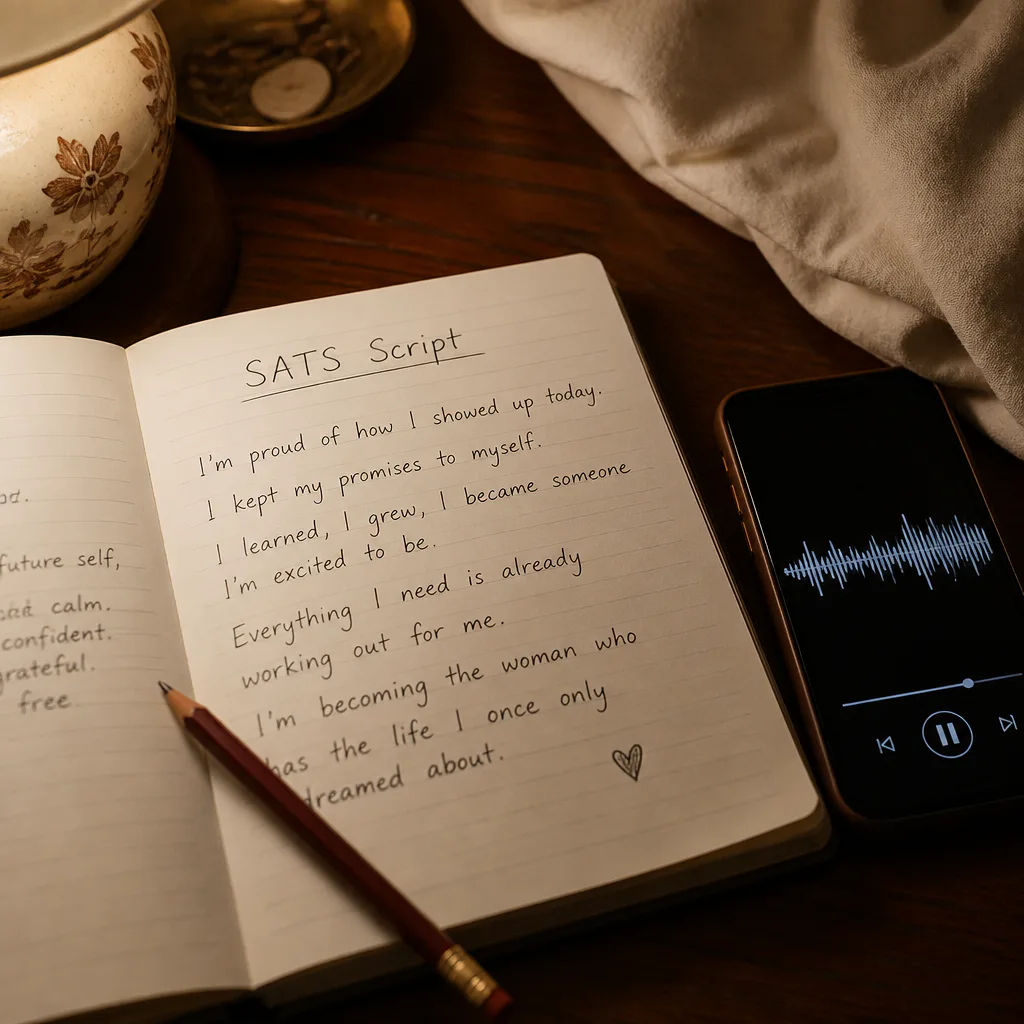
How do you create a SATS scene that works with audio?
You create a SATS scene by choosing one short moment that would naturally happen after your desire is already true.
Neville was exact about this. Don’t visualize the whole plan. Don’t rehearse the problem being solved. Choose the end. In his lectures, he often used small scenes: a handshake, a congratulation, a friend’s voice, the feeling of wearing a ring, the sound of someone calling you by a new title. The scene should last 5 to 15 seconds when imagined silently.
Future-self audio can expand that moment, but it still needs a center. If the scene is “I’m safe in my new home,” the audio might mention the key in your hand, the quiet hallway, the message from a friend saying, “I’m so glad you found this place.” Keep it ordinary. The body trusts ordinary details. Research on episodic future thinking, including work by Daniel Schacter’s lab at Harvard, has shown that imagining future events often uses memory systems. Specific scenes are easier for the mind to simulate than abstract goals.
Here’s a simple structure:
- Name the fulfilled fact in one sentence.
- Add one sensory detail: sound, touch, light, or weight.
- Add one relational cue: someone knows, sees, or responds.
- Add one body cue: your shoulders soften, your breath slows.
- End with a sentence you can believe tonight.
| Desire | Weak SATS scene | Better SATS audio cue |
|---|---|---|
| New work | “I’m successful.” | “You hear your name in the welcome meeting.” |
| Love | “I’m loved.” | “Your phone lights up with the message you hoped for.” |
| Home | “I have my dream place.” | “The key turns easily in your own front door.” |
| Health habit | “I’m disciplined.” | “Your shoes are by the door because morning is already decided.” |
This matters for affirmations, too. A phrase lands better when it points to a lived moment. “I’m chosen” may feel too large on a hard day. “I hear them say, ‘We want you here’” can be easier to receive.
One scene. One voice. One felt end. That’s enough for tonight.
What are the steps for practicing Neville Goddard SATS with audio?
The steps are simple: prepare the scene while awake, listen when drowsy, and repeat the same fulfilled state without checking for proof.
Set aside about 12 minutes. The National Sleep Foundation has long recommended 7 to 9 hours of sleep for most adults, so don’t build a practice that steals rest. SATS should live at the edge of sleep, not in a 45-minute self-improvement session that makes you wired.
Try this for 7 nights:
- Choose one desire before evening. Don’t decide in bed. Bedtime decisions become loops.
- Write the fulfilled scene in 3 to 6 lines. Present tense. First or second person. No long explanation.
- Use a short future-self audio. Three to 8 minutes is enough. If you’re using Aya, listen to your Dream-Self Moment.
- Dim the room 30 minutes before sleep. Huberman Lab often discusses light as a strong signal for circadian timing; the basic science is well established.
- Lie still and listen once. Don’t restart unless the audio stopped by accident.
- Let the final image repeat by itself. If it fades, softly return to the last true sentence.
- Sleep, or rest. Falling asleep counts.
The practice becomes difficult when you start checking. “Did I feel it?” “Was it real?” “Did I ruin it?” That is the old state asking for a receipt. Let the receipt wait.
A small note about timing: some people like pairing SATS with moon cycles, birthdays, or personal seasons. If that helps you remember, fine. If you use astrology and manifestation, let it be a calendar, not a verdict. A new moon can mark a beginning. It doesn’t do the listening for you.
The quiet skill is repetition without panic. In behavior research, consistency often matters more than intensity; a 2009 study in the European Journal of Social Psychology found habit formation took a median of 66 days, with wide variation. SATS is not a habit of action exactly, but the lesson still helps. Return long enough for the state to become familiar.
What should your future-self audio actually say?
Your future-self audio should speak from the fulfilled version of you in language that feels calm, specific, and already lived.
Avoid speeches. Avoid hype. The drowsy mind doesn’t need a sermon. It needs a true-feeling thread. Neville’s phrase “feeling is the secret” is often misunderstood as emotional intensity. He meant the felt reality of being the person for whom this is true. Sometimes that feeling is quiet relief. Sometimes it’s normalness. Often it’s just the absence of the old question.
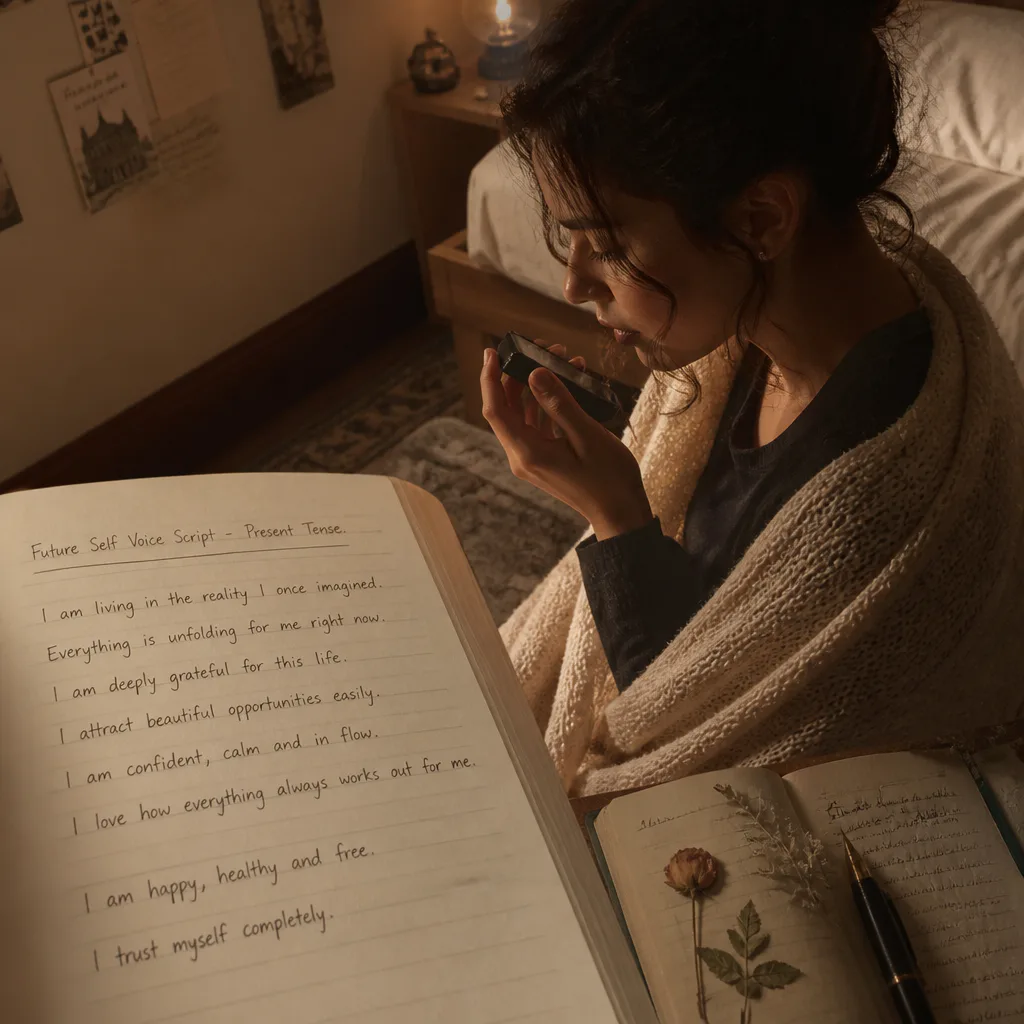
A usable script might sound like this:
You’re in your room, and the day has already given you the sign. You don’t have to reach for it now. You heard the words. You saw the message. Your body knows before your mind explains. This is what it feels like when it’s already yours. Simple. Known. Here.
Keep the recording slow. Many guided meditation recordings sit around 60 to 80 words per minute, compared with ordinary conversation closer to 120 to 160 words per minute. Slower pacing gives space for imagery. Leave 2 to 4 seconds between key sentences if you record your own.
Use these ingredients:
- Present-tense proof: “You’re holding the signed page.”
- Sensory detail: “The paper is cool under your hand.”
- Social confirmation: “They say your name with certainty.”
- Body state: “Your jaw is loose. Your chest is open.”
- Return phrase: “This is already known in you.”
Don’t make the audio argue against doubt. If the script says “You’re not scared, you’re not behind, you’re not failing,” the mind hears scared, behind, failing. Say what’s here instead. Cognitive linguistics has studied negation for decades; even simple instructions like “don’t think of a white bear,” made famous by Daniel Wegner’s 1987 research, show how suppression can keep an image active.
A good SATS audio doesn’t fight the old story. It gives the mind somewhere truer to sleep.
How do you know if SATS is working without obsessing?
You know SATS is working when the fulfilled state becomes easier to return to, even before outer facts change.
This is tender, because people want signs. I understand. You listen for 3 nights, then check the phone. You listen for 5 nights, then measure your mood. But Neville’s practice asks for a different kind of evidence first: inner naturalness. Does the scene feel less strange? Does the body resist less? Can you remember the end during the day without forcing it?
Track softly, not constantly. Use a 1 to 5 scale once each morning, after water or coffee. Don’t write a page. Don’t audit the night. A small check can keep you honest without turning the practice into surveillance.
| Morning check | 1 | 3 | 5 |
|---|---|---|---|
| Scene felt reachable | No | Sometimes | Yes |
| Body softened | No | A little | Clearly |
| Less urge to force | No | Some | Yes |
| Returned during day | No | Once | Naturally |
A 2018 paper in Behavior Research and Therapy noted that mental imagery can influence emotion more strongly than verbal thought in some contexts. That’s one reason you’re watching felt shifts, not only repeated words. Still, don’t overclaim. SATS is not a medical treatment, and it’s not a substitute for practical care, therapy, or action when those are needed.
The old state often leaves quietly. Not with thunder. With less rehearsal.
If you’re using Aya, let the daily audio remain the center. You might place one written sentence from the audio on your Manifestation Board, or pair it with a simple daily affirmation, but don’t turn the complements into more work. Listening is the practice. The board remembers. The affirmation echoes.
For a broader grounding, return to the manifestation pillar when you need language for the whole practice, and the AYA Method guide when you need the audio held simply again.
What mistakes make SATS feel harder than it needs to be?
SATS gets harder when you make it long, vague, urgent, or dependent on a perfect mood.
The most common mistake is trying to visualize too much. You don’t need a full movie. Neville often taught the use of a short scene, repeated until it felt real. A 10-second inner clip can be stronger than a 10-minute mental film that keeps changing. The mind trusts repetition.
The second mistake is choosing a scene that feels like a performance. If your desire is partnership, don’t force a cinematic wedding scene if your body can’t receive it tonight. Choose the hand on the table. The message. The ordinary Sunday. The nervous system often accepts small safety before large joy. Polyvagal theory is debated in parts, but the general clinical idea that safety cues affect state is widely used in therapy settings.
The third mistake is changing the audio every night. Novelty feels productive. It often hides avoidance. Try one recording for at least 7 nights. If the scene still feels false after a week, adjust the doorway, not the desire. Make the cue smaller, more sensory, more yours.
Use this rule:
- If you feel bored, keep going.
- If you feel strained, soften the scene.
- If you feel afraid, make the next sentence safer.
- If you feel nothing, listen anyway.
Pew Research Center reported in 2022 that about 27% of U.S. adults say they think about the meaning and purpose of life daily. That tells you something plain: people are already practicing attention. SATS only gives that attention a nightly form.
Neville Goddard SATS with future-self audio is not about becoming someone else. It’s about sleeping as the version of you who no longer needs to beg the future for permission.
Tonight, let the voice be small enough to believe.